Social has a way of shifting quietly, then all at once. The North Strategic Social Trends Report takes a step back to look at the patterns shaping social media, from how content moves across platforms to how audiences decide what earns attention.
Here’s our latest analysis:
Brands are building social shows, not just social posts
Fall social media trends show the social landscape continues to evolve at a rapid pace. But unlike previous years, the biggest shifts are happening in the relationship between audiences and AI, the growing importance of repeatable content franchises, and the rise of creators as full-fledged entertainment brands.
Today, brands and creators are moving beyond individual pieces of content and investing in recurring, serialized content. What started as an emerging tactic has quickly become a proven storytelling strategy across industries.
Much of the momentum can be traced back to the attention generated by Bilt’s Roomies, the creator-style scripted series that blurred the lines between entertainment and advertising. The series demonstrated that audiences are willing to engage with branded content when the focus is on storytelling first and product marketing second. Industry coverage helped cement the concept of social shows as a viable brand-building strategy.
The appeal is simple: recurring formats create anticipation, build audience habits, and provide brands with a scalable content engine, whether it’s a high-production scripted series or a lower-fi repeatable format. One of our favourite recent low-fi examples comes from a crafty Minnesota coffee shop, which tests new drink recipes every spring, summer, fall and winter until they find one to add to their seasonal menu.
A post shared by Little Joy | Coffee Shop | Roaster (@littlejoycoffee)
Brands are also stretching single pieces of content into an ongoing social ecosystem: full-length YouTube videos alongside recurring Instagram and TikTok executions. The approach transforms a single conversation into weeks of programming that reinforces key messages while encouraging repeat audience engagement.
Consumers are navigating an AI disconnect
While the broader discourse around artificial intelligence focuses on AI labs and superintelligence, on social media, consumers are stuck in a kind of disconnect between distrust and entertainment.
As social media consultant Rachel Karten put it on a Bloomberg podcast last month, “If your favourite fast-food chain is using AI-generated imagery, what other shortcuts might they be taking in their process?”
Scroll through comments on AI-generated marketing on social media, you’ll likely find a slew of comments calling out so-called “AI slop” and shaming the use of the technology.
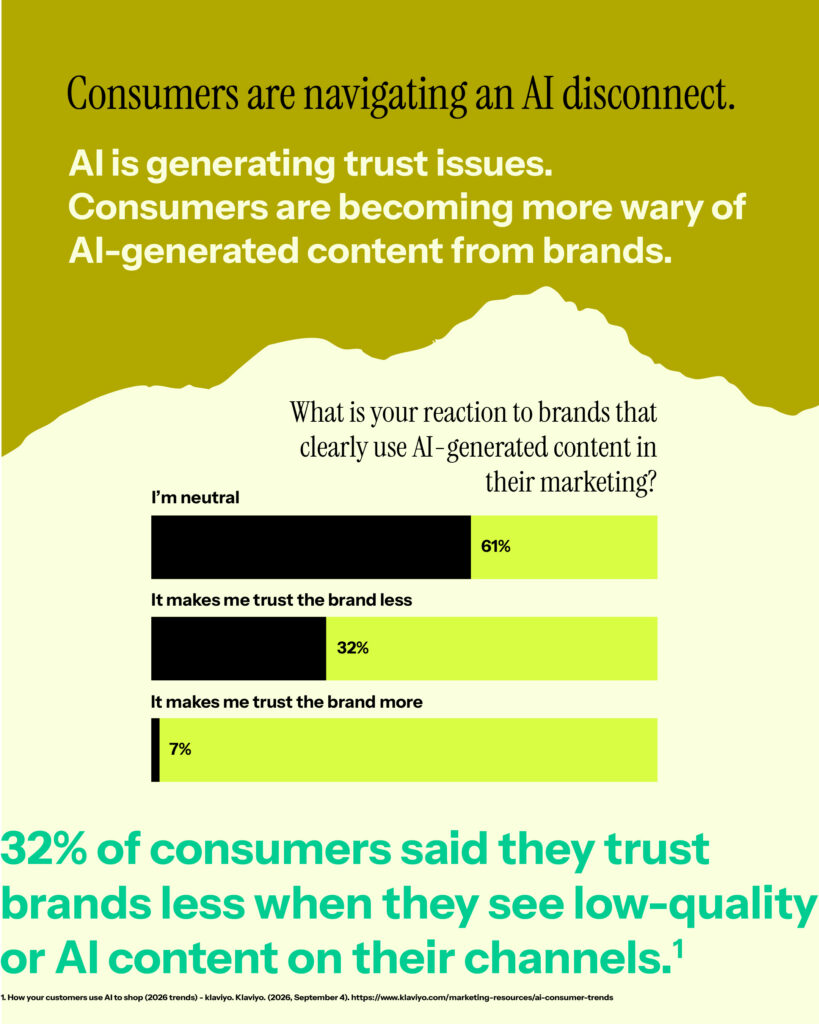
New research backs this up. Consumers are becoming more wary of AI-generated content from brands, according to several recent studies. Klaviyo’s 2026 AI Consumer Trends Report found that one-third of consumers said they trust brands less when they see low-quality or AI content on their channels.
But on the flip side, many social media users still enjoy AI content like the web series “Fruit Love Island.” Both realities make for a social media landscape that is in a state of confusion and disconnect about the place of AI on our feeds.
As the technology rapidly develops, it’s likely that that contradiction so apparent on social media could dissolve.
Creators are becoming entertainment properties
One of the biggest shifts in the creator economy is that creators are operating like full-fledged entertainment brands.
For years, marketers primarily viewed creators as a distribution channel, partnering with them to access reach and engagement. Today, we treat creators more like media companies.
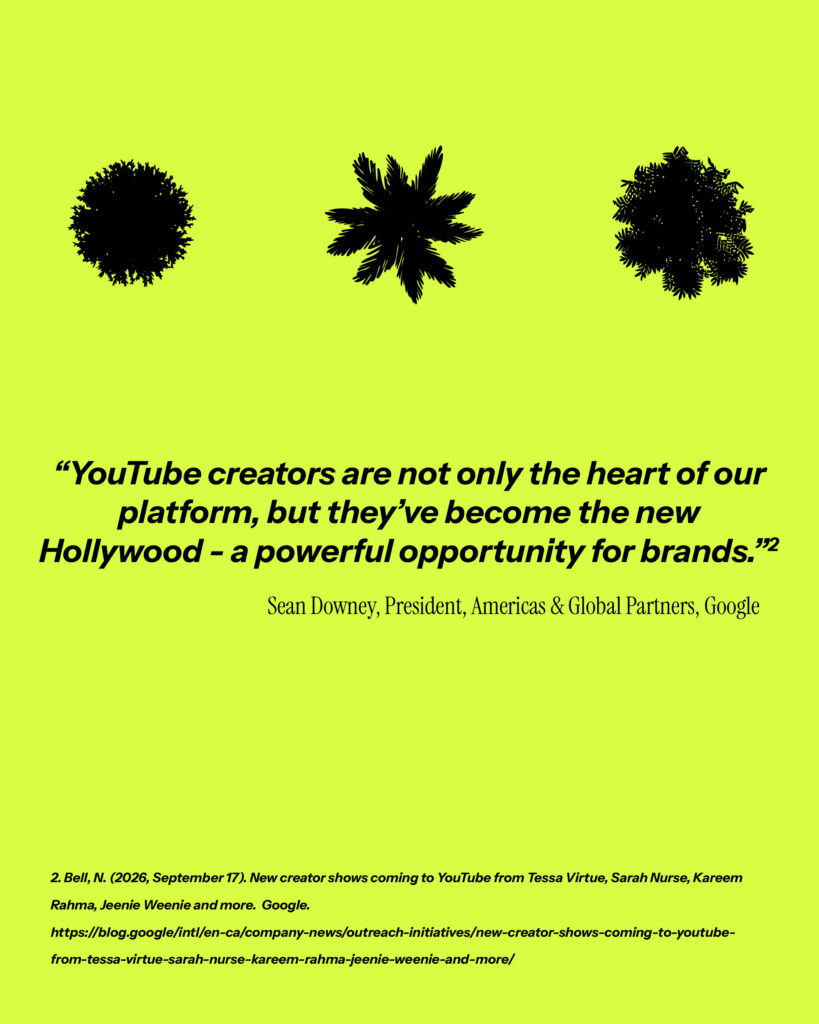
Nowhere was this more evident than at YouTube Canada’s 2026 Features showcase in Toronto, where the platform unveiled a slate of creator-led shows featuring personalities like chef Matty Matheson and hockey star Sara Nurse. Rather than positioning creators as sponsorship vehicles, YouTube showcased them as the next generation of entertainment studios capable of producing repeatable content franchises that audiences actively return to.
The trend also reflects a broader shift in consumer behaviour. Audiences are developing viewing habits around creators in the same way previous generations followed television personalities and franchises.
What these social media trends mean for brands
These shifts clarify where brands should focus next:
- Think beyond individual posts and build repeatable content formats.
- Use AI thoughtfully but keep people at the centre of the work.
- Treat creators as long-term entertainment partners, not just distribution channels.
If you’re thinking through how these shifts show up in your own social strategy, you can find more of our perspective across the North blog and on social.
If you want to talk about what this means for your brand, reach out to our team.
—
By the North Strategic Social Trends Team